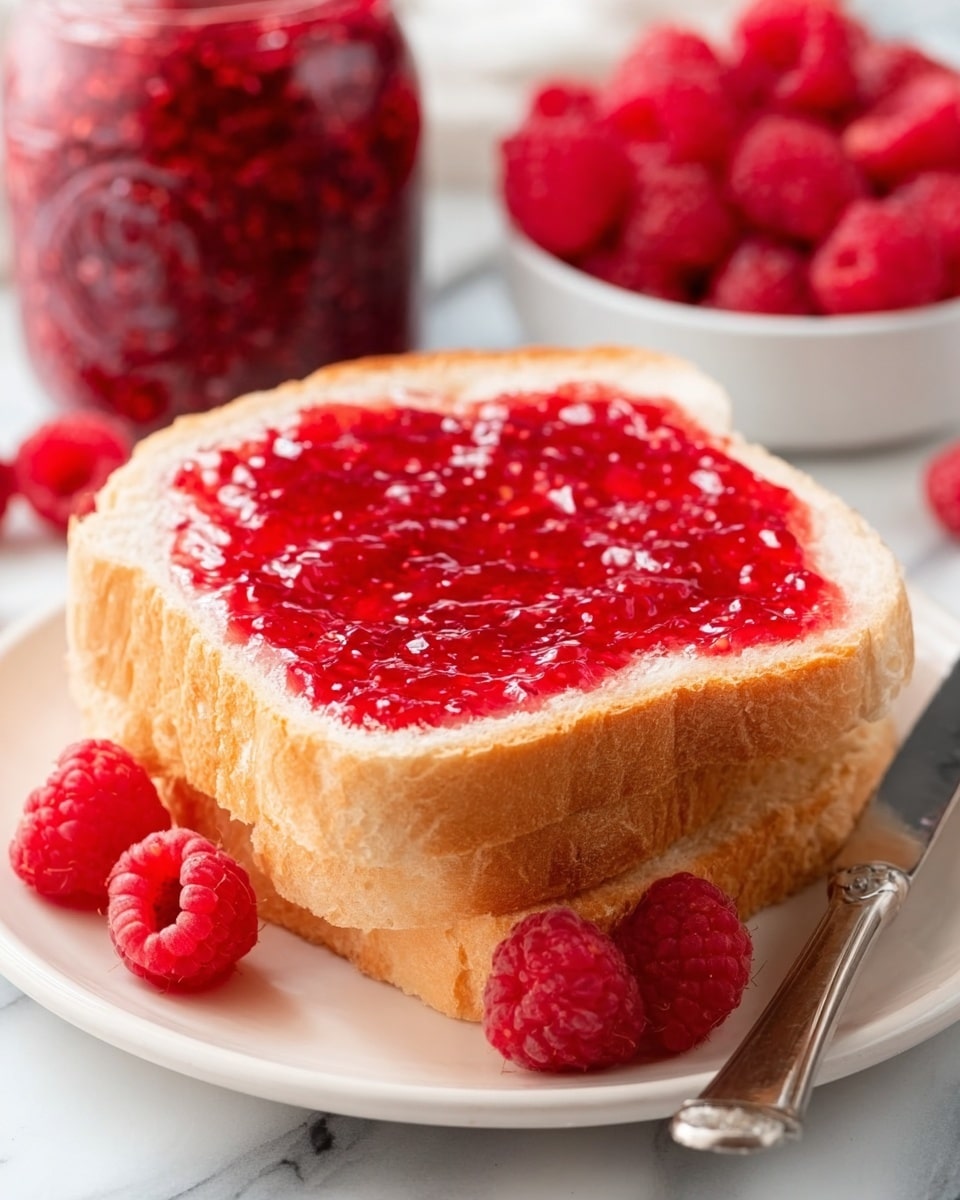
I love making raspberry freezer jam when I want something fresh, fruity, and incredibly easy to prepare. It captures the bright flavor of ripe raspberries without the need for complicated canning. The texture stays soft and spreadable, and the taste feels like pure summer in every spoonful.
Why You’ll Love This Recipe
I enjoy how quick this recipe is compared to traditional jam-making. There’s no need for long cooking times, which helps preserve the natural flavor of the raspberries. I also like that I can store it for months and always have a homemade spread ready. It’s perfect for toast, desserts, or even swirling into yogurt.
ingredients
(Here’s a tip: Check out the full list of ingredients and measurements in the recipe card below.)
2 cups fresh raspberries, crushed 1 1/2 cups granulated sugar 1 tablespoon lemon juice 1 packet (1.75 ounces) fruit pectin (such as instant or freezer jam pectin) 3/4 cup water
directions
I start by crushing the raspberries in a large bowl until I reach my desired consistency. I like leaving a few small chunks for texture.
In another bowl, I mix the sugar and pectin together. Then I add the water and stir until everything is well combined.
I pour the pectin mixture into the crushed raspberries and add the lemon juice. I stir continuously for about 3 minutes until the sugar begins to dissolve and the mixture thickens slightly.
Next, I pour the jam into clean jars or containers, leaving a little space at the top for expansion.
I let the jam sit at room temperature for about 30 minutes, then transfer it to the freezer.
Servings and timing
I usually get about 3 cups of jam, which equals roughly 24 servings (about 2 tablespoons each). Preparation takes around 15 minutes, plus 30 minutes of resting time. I plan for about 45 minutes total before freezing.
Variations
I sometimes mix raspberries with strawberries or blueberries for a blended berry jam. If I prefer a less sweet version, I reduce the sugar slightly and use a low-sugar pectin. I also like adding a touch of vanilla extract for a subtle flavor twist.
storage/reheating
I store the jam in the freezer for up to 1 year. Once I move it to the refrigerator, I use it within 2 to 3 weeks. I don’t reheat freezer jam, but I let it thaw in the fridge before using.
FAQs
Can I use frozen raspberries?
I often use frozen raspberries. I just thaw them first and drain any excess liquid.
Do I have to use pectin?
I find pectin important for the right texture. Without it, the jam may not set properly.
Why is my jam too runny?
It may need more stirring time or the correct ratio of sugar and pectin.
Can I reduce the sugar?
I can, but I make sure to use a low-sugar pectin to maintain the proper consistency.
How long does freezer jam last?
I keep it in the freezer for up to a year and in the fridge for a few weeks after thawing.
Conclusion
I always enjoy making raspberry freezer jam because it’s simple, quick, and bursting with fresh flavor. It’s one of those recipes I can rely on whenever I want a homemade touch without much effort.
A quick and easy raspberry freezer jam bursting with fresh fruity flavor, featuring a soft, spreadable texture without the need for traditional canning.
Ingredients
2 cups fresh raspberries, crushed
1 1/2 cups granulated sugar
1 tablespoon lemon juice
1 packet (1.75 ounces) fruit pectin
3/4 cup water
Instructions
Crush the raspberries in a large bowl to your desired consistency.
In another bowl, mix the sugar and pectin together.
Add water to the sugar-pectin mixture and stir until well combined.
Pour the pectin mixture into the crushed raspberries.
Add lemon juice and stir continuously for about 3 minutes until slightly thickened.
Pour the jam into clean jars or containers, leaving space at the top.
Let sit at room temperature for 30 minutes.
Transfer to the freezer for storage.
Notes
Use ripe raspberries for the best flavor.
Frozen raspberries can be used if thawed and drained first.
Do not skip the pectin as it helps the jam set properly.
Stir thoroughly to dissolve the sugar and activate the pectin.
Leave space in containers for expansion during freezing.