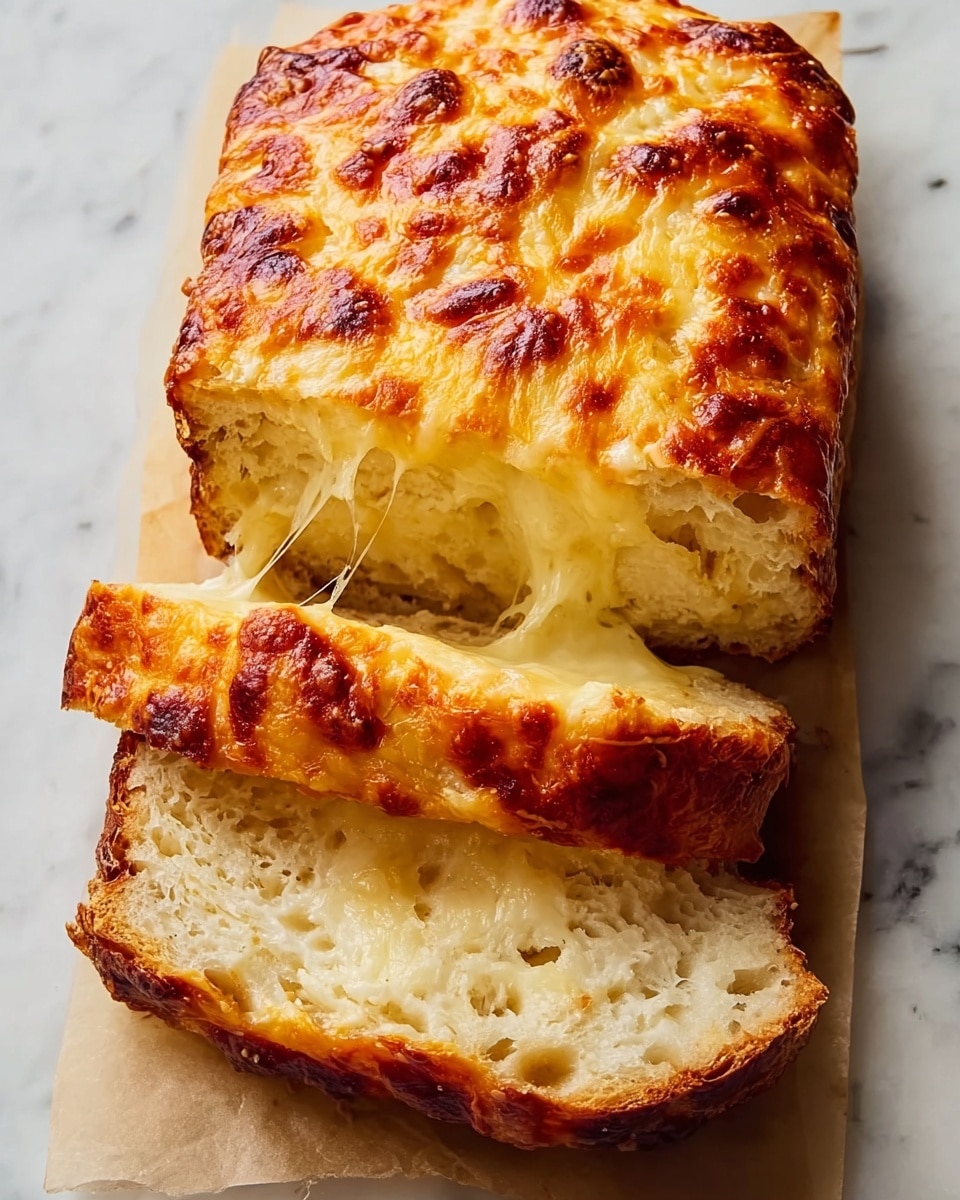
This no-knead cheese bread is the ultimate in simple, rustic home baking. With a golden, crusty exterior and a soft, cheesy interior, it’s the kind of loaf I love to throw together when I want something warm and comforting without spending hours kneading or shaping. The dough does all the work overnight, and I just pop it into a Dutch oven to bake. The result? A golden loaf that’s packed with melty cheese and irresistible flavor.
Why You’ll Love This Recipe
I love how hands-off this bread is — there’s no kneading, no complicated steps, and no need for a stand mixer. The long rest does the heavy lifting, creating a wonderfully airy and chewy texture. It’s flexible too: I can switch up the cheese, add herbs or garlic, and make it my own. It’s perfect for beginner bakers or anyone craving fresh bread with minimal effort.
Ingredients
(Here’s a tip: Check out the full list of ingredients and measurements in the recipe card below.)
Optional: 1 teaspoon dried herbs (e.g. oregano, thyme) or 1/2 teaspoon garlic powder for flavor
Directions
I start by whisking the flour, salt, and yeast in a large bowl.
Then I pour in the warm water and stir until I get a shaggy, sticky dough.
I fold in the cheese and any herbs or garlic powder I want to use, making sure it’s all evenly mixed. The dough is soft and loose, and that’s just right.
I cover the bowl with plastic wrap or a damp towel and let it rest at room temperature for 12–18 hours. By morning, it’s doubled and bubbly.
Once it’s ready, I preheat the oven to 230 °C (450 °F) with my Dutch oven inside.
I gently turn the dough out onto a floured surface and shape it into a rough ball by tucking the edges underneath.
I sprinkle a bit of flour on top (optional), then carefully place it into the hot Dutch oven, cover it with the lid, and bake for 30 minutes.
After that, I remove the lid and bake for another 10–15 minutes until the crust is a deep golden brown and sounds hollow when tapped.
I always let the bread cool for at least 20 minutes on a rack before slicing so the crumb can set.
Servings and timing
This recipe makes one small loaf, which I slice into 8–10 hearty pieces.
Total time: About 13 hours or overnight + 45 minutes
Variations
I like to switch things up depending on what I have on hand. Sometimes I swap the cheddar for mozzarella, gruyère, or a spicy pepper jack for more kick. Herbs like rosemary or thyme add great flavor, and garlic powder or cracked black pepper gives the crust a savory edge. I even enjoy mixing cheeses to get a deeper flavor.
Storage/Reheating
Once the bread has fully cooled, I wrap it in a clean kitchen towel or store it in an airtight container at room temperature for up to 2 days. For longer storage, I freeze it sliced so I can reheat one piece at a time. To reheat, I toast slices or warm them in a 180 °C (350 °F) oven for about 10 minutes. If I want a softer crust, I wrap the loaf in a towel after cooling.
FAQs
How do I know when the dough is ready to bake?
I look for a dough that has doubled in size and has bubbles on the surface. It should feel airy and soft when I gently poke it.
Can I use active dry yeast instead of instant yeast?
Yes, I can, but I need to dissolve it in the warm water first and let it sit for 5–10 minutes before adding it to the flour.
What if I don’t have a Dutch oven?
I can bake the loaf on a baking sheet, but I’ll get a less crusty result. To mimic the steam, I sometimes place a pan of hot water in the oven during baking.
Can I let the dough rise for more than 18 hours?
I try not to go much over 18 hours. After that, the dough can over-proof, which weakens the structure and may lead to a flat loaf.
Why is my bread dense?
This usually happens if the dough didn’t rise enough or if I added too much flour during shaping. I make sure the dough is bubbly and soft before baking, and I handle it gently.
Conclusion
This no-knead cheese bread is one of my favorite low-effort, high-reward bakes. The combination of rustic crust, melty cheese, and simple ingredients makes it a go-to recipe when I want homemade bread without the hassle. Whether I eat it warm from the oven or toasted the next day, every slice is pure comfort.
A simple, no‑knead cheese bread loaf — rustic crust, soft interior, with melty cheese throughout. Great for casual baking when you don’t want to knead dough.
Optional: 1 teaspoon dried herbs (e.g. oregano, thyme) or 1/2 teaspoon garlic powder for flavor
Instructions
In a large bowl, whisk together the flour, salt, and instant yeast.
Add the warm water to the dry ingredients and stir until a shaggy, sticky dough forms.
Add the shredded cheese (and optional herbs/garlic powder) to the dough, folding gently until evenly distributed. The dough will be sticky and loose — that’s normal.
Cover the bowl with plastic wrap or a damp kitchen towel. Let it rest at room temperature for 12–18 hours (overnight is ideal). The dough should double in size and become bubbly.
After the rise, preheat your oven to 230 °C (450 °F). Place a heavy lidded pot (like a Dutch oven) with its lid in the oven while it heats up.
Carefully turn the dough out onto a well‑floured surface. Shape it gently into a round loaf — no kneading, just tuck the edges beneath to form a rough ball.
Sprinkle a little flour on top (optional). Carefully remove the hot pot from the oven, place the dough inside, cover with the lid, and bake for 30 minutes.
After 30 minutes, remove the lid and bake for another 10–15 minutes, or until the crust is deep golden brown and the loaf sounds hollow when tapped.
Remove from oven and let cool on a wire rack for at least 20 minutes before slicing. This helps the crumb set properly.
Notes
This is a “no‑knead” recipe — you rely on a long rest instead of working the dough.
You can swap in other cheeses (like mozzarella, gruyère, or a mix) — stronger cheeses will give more flavor.
Add herbs or spices (rosemary, garlic powder, cracked pepper) for variety.
Make sure your dough is bubbly and doubled in volume before baking — that long rest develops both flavor and structure.
If you like a softer crust, you can wrap the loaf in a clean kitchen towel after cooling instead of leaving it exposed to air.